
Norway's Surgeon General Brig. Gen. Petter Iversen on Capacity, Cold, and the Next War

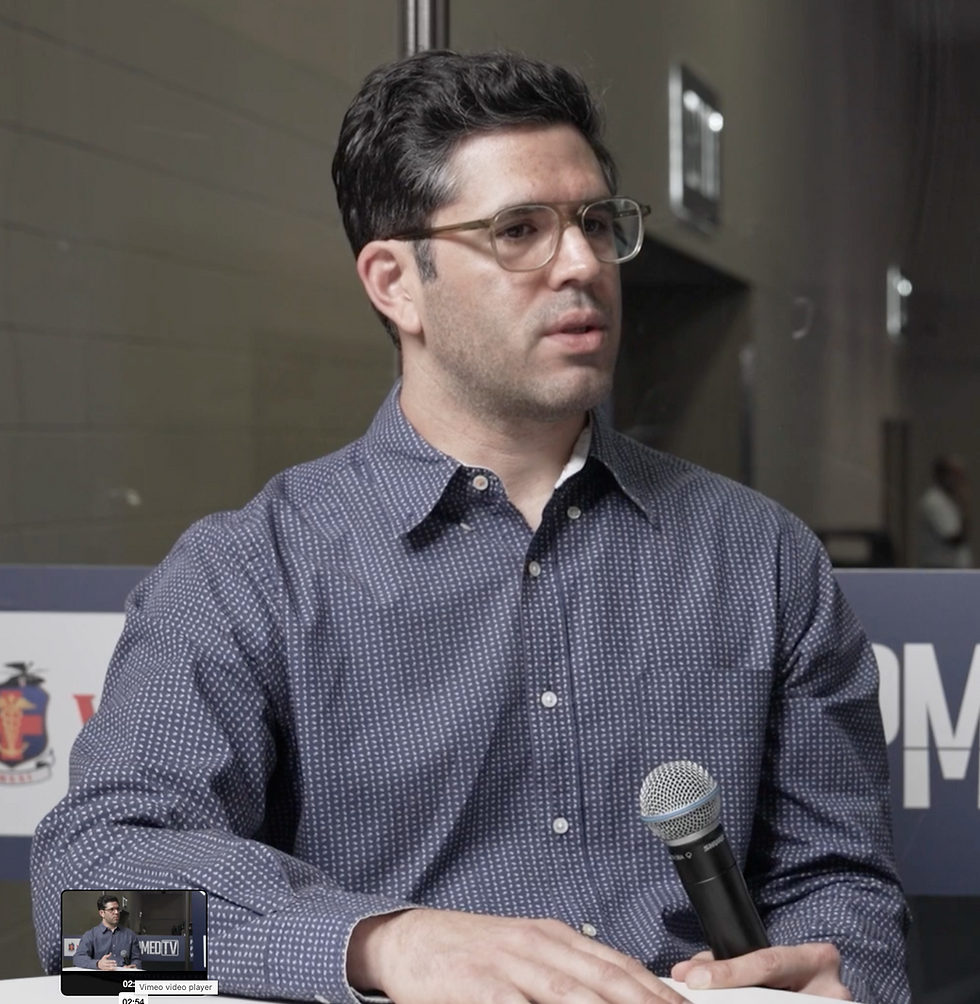
Norway fields a small military. It also flew more than 3,500 wounded patients out of Ukraine without losing one in the air. Brig. Gen. Petter Iversen, M.D., who runs that medical service, sat down with WarDocs at the Defense Strategies Institute Operational Medicine Symposium and made an argument the rest of the Alliance needs to hear.
The Problem Is Capacity, Not Competence
Brig. Gen. Iversen is Surgeon General of the Norwegian Armed Forces and chairs the NATO Committee of the Chiefs of Military Medical Services. Asked what worries him most about preparing for large-scale combat operations, he does not name a clinical gap. He names a number. There are not enough military medical troops to sustain treatment and evacuation along a long, contested front line.
The last twenty-five years trained the Alliance under conditions the next fight will not offer. Expeditionary warfare gave NATO air supremacy, controlled evacuation routes, and time. A large-scale fight replaces that with contested airspace and care delivered forward, under threat. The skills transfer. The force structure does not.
Return to Duty Is Combat Power
Modern militaries are small, specialized, and carry no bench. That turns a clinical function into an operational one: every soldier treated and returned to the line replaces a person who does not otherwise exist.
Deployment itself costs health. People get sick, exhausted, and mentally worn before anyone is wounded. He points to the Ukrainian recruits trained in Europe — roughly fifteen percent reach the front with mental health problems and are pulled off the line within weeks. Two-thirds return to duty when treatment is available nearby. Proximity, not sophistication, is what makes that number work.
Resilience Means Building Generalists
Norway has required a war surgery course of every general surgery trainee for more than fifty years. The reason is not sentimental: a specialized hospital system with unlimited consumables does not produce clinicians comfortable operating without them.
Brig. Gen. Iversen sees the drift plainly. Trainees four years into their programs are more hesitant about an open abdominal operation than their counterparts were fifteen years ago. He does not dismiss the technology — his own daughter, a first-year resident, tells him he is old school — but he frames Norway's curriculum debate as a search for balance. Resilience, in his definition, is generalist competence, deliberately preserved.
Flying the Wounded Out of Ukraine
The Norwegian strategic evacuation enterprise began as a workaround. A small country cannot dedicate its C-130 fleet to patient movement, so Norway contracted with the Scandinavian Airlines System, an arrangement first stood up in response to the tsunami. A civil airliner can be reconfigured into a medical evacuation platform in roughly twenty hours.
Since 2022 the system has flown near-weekly missions, moving more than 3,500 patients out of Ukraine with no fatal outcomes en route, some of them severely injured or septic in flight. Teams are led by a senior medical officer, usually an anesthesiologist. Patients are distributed across Europe through a coordination mechanism in Brussels — most to Germany, others to France, Norway, Finland, and Sweden.
The flying was the easy part. The difficult work was selecting the right patients, communicating across national borders, and solving a problem with nothing to do with medicine: letting Ukraine keep track of where its own soldiers ended up.
Cold Changes the Math
Twenty-five years of desert warfare produced excellent protocols, TCCC among them, built largely for warm environments. Returning to the Arctic does not invalidate them. Everyone knows to keep the patient warm.
What changes is the cost. Cold weather casualty care takes more resources, demands more of the people delivering it, and has to be trained deliberately. Brig. Gen. Iversen's conclusion is unusual for a surgeon: the best medicine in the Arctic is talking to commanders about fighting smarter, because a wound a warm environment survives can be fatal in the cold.
The Message to America
Asked what he wanted American listeners to take away, Brig. Gen. Iversen gave a short answer. Prepare mentally for something much bigger than you have thought about.
He describes a large-scale combat operation on two fronts at once — Europe and the Pacific — as so demanding it requires thinking outside frameworks built for one or two casualties in an environment the Alliance dominated. Article 5 operations are a different problem, and preparing for them has to start now.
Conclusion
Twenty-two minutes with a NATO Surgeon General buys a clear-eyed read on where Allied military medicine actually stands. Listen to the full conversation, and share it with the clinicians and leaders in your own service.
HOW TO WATCH
Check out the full episode featuring Brig. Gen. Petter Iversen, M.D., on our YouTube channel:
GUEST BIO
Brig. Gen. Petter Iversen, M.D., is the Surgeon General of the Norwegian Armed Forces, Sessvollmoen, Norway. Previously, he served as commanding officer and chief of surgery at the War Surgery and Emergency Medicine Division, Norwegian Armed Forces Joint Medical Services. He is a consultant orthopedic trauma surgeon and has done several deployments to Afghanistan and Chad, and anti-piracy operations to the Indian Ocean. He also has served as a trauma surgeon and senior medical officer.
More from the Operational Medicine Symposium
This episode is part of the WarDocs and OpMed TV interview series recorded at the Defense Strategies Institute Operational Medicine Symposium in San Antonio, March 2026. Watch the full set of DSI OP MED videos here: https://hubs.li/Q04jRhjP0
Honoring the Legacy and Preserving the History of Military Medicine
The WarDocs Mission- WarDocs exists to honor the legacy of Military Medicine, preserve its history, and inspire every generation — across all Services, Corps, and Ranks — to serve with excellence and pride. Through mentorship, coaching, and education, we equip those considering, entering, and serving in military medicine with the knowledge, connections, and community they need to thrive. We celebrate Who we are, What we do, and, most importantly, How we serve Our Patients, the DoW, and Our Nation.
Find out more and join Team WarDocs at https://www.wardocspodcast.com/
Check our list of previous guest episodes at https://www.wardocspodcast.com/our-guests
Subscribe and Like our Videos on our YouTube Channel: https://www.youtube.com/@wardocspodcast
Listen to the “What We Are For” Episode 47. https://bit.ly/3r87Afm
WarDocs- The Military Medicine Podcast is a Non-Profit, Tax-exempt-501(c)(3) Veteran Run Organization run by volunteers. All donations are tax-deductible and go to honoring and preserving the history, experiences, successes, and lessons learned in Military Medicine. A tax receipt will be sent to you.
WARDOCS documents the experiences, contributions, and innovations of all military medicine Services, ranks, and Corps who are affectionately called “Docs” as a sign of respect, trust, and confidence on and off the battlefield, demonstrating dedication to the medical care of fellow comrades in arms.
Follow Us on Social Media
Twitter: @wardocspodcast
Facebook: WarDocs Podcast
Instagram: @wardocspodcast
LinkedIn: WarDocs-The Military Medicine Podcast
YouTube Channel: https://www.youtube.com/@wardocspodcast
**Photos and other visual information (VI) in this post are provided by the guest or obtained from DVIDS (dvidshub.net). Department of War VI created by U.S. Government employees in their official duties is generally not eligible for U.S. copyright protection. WarDocs uses this material without implying endorsement by the Department of War or any federal entity, and no endorsement of any individual, business, organization, product, service, political party, or candidate is stated or implied.
Original photos used in the post can be found at the following links:https://www.dvidshub.net/news/501610/nato-military-medical-leaders-discuss-global-partnerships-readiness-digital-transformationhttps://www.dvidshub.net/news/568257/vigorous-warrior-26-demonstrates-natos-medical-capabilitieshttps://www.dvidshub.net/image/9518323/core-26-us-and-allied-medics-train-save-lives-norway-during-exercise-cold-response


I played Block Blast while waiting for a bike rental attendant to adjust the saddle on the bicycle I picked. He tightened the clamp and gave the seat a quick shake to check it.