
Is America Ready? Dr. Paul D. Biddinger on the Real Gaps in U.S. Healthcare Preparedness for Large-Scale Combat Operations

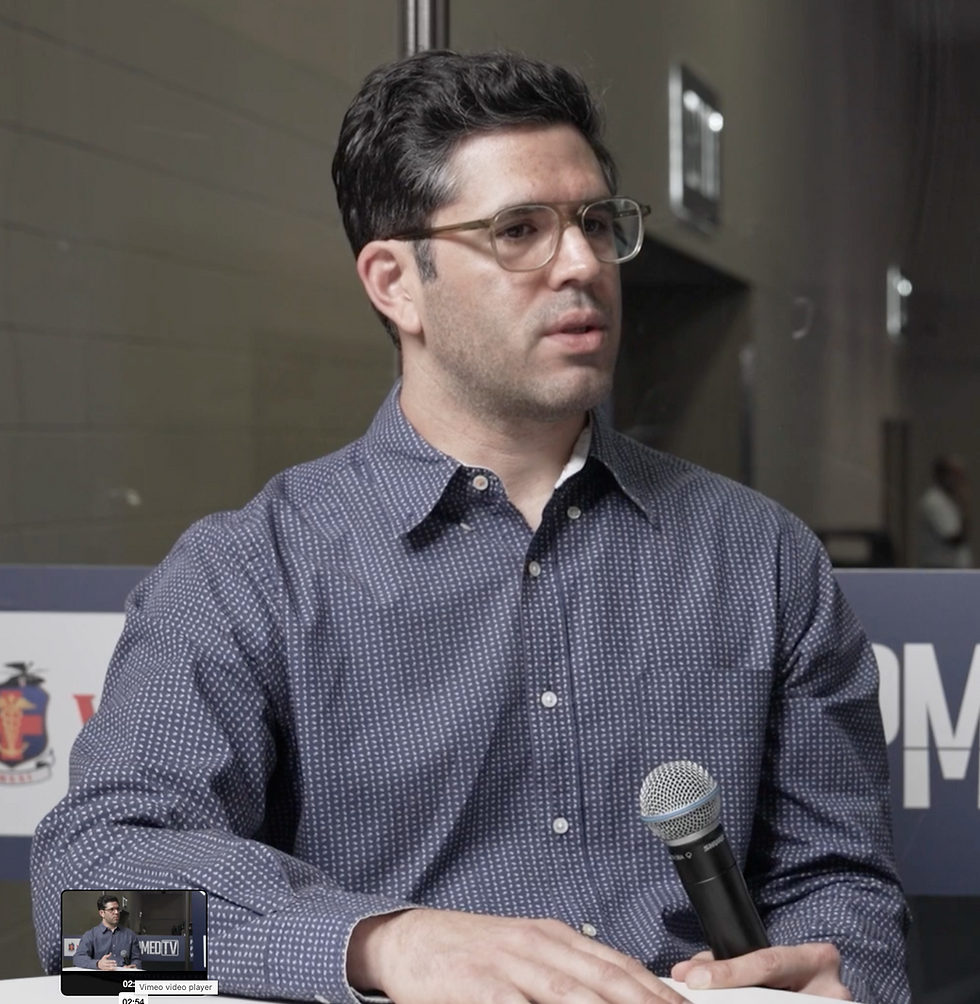
What happens when a thousand wounded service members arrive on American soil in a single day — and they keep arriving for a hundred days straight? That is the scenario Dr. Paul D. Biddinger is paid to plan for, and in his WarDocs interview, he delivers a clear-eyed, data-grounded assessment: the U.S. healthcare system is not ready — and it needs to start building that readiness now.
The Capacity Crisis Nobody Talks About
Dr. Biddinger opens with a fact that reframes the entire LSCO conversation: civilian hospitals are already at or above capacity. Emergency departments are boarding patients. ICUs are full. EMS systems across the country are short-staffed. Any large-scale combat operations medical plan that assumes available civilian surge capacity is planning for a healthcare system that no longer exists. His Henry M. Jackson Foundation research project is building the data architecture to understand where true capacity and capability — not just open beds, but beds with the right subspecialty expertise — actually exists in real time across state and regional lines.
Data Silos Are the Enemy
The Federal Coordinating Centers within the National Disaster Medical System are supposed to manage patient distribution between military and civilian systems. Dr. Biddinger's assessment: they are too siloed, insufficiently connected to clinical expertise, and too inconsistent from one FCC to the next. Meanwhile, sophisticated civilian health systems have built highly capable patient transfer and regulation programs staffed by physicians and nurses who spend their careers matching the right patient to the right bed. The solution is not to replace the FCC structure — it is to integrate the clinical sophistication of civilian-side patient regulation with the military command and tracking infrastructure, so that an open ankle fracture does not block a thoracic surgery bed at a Level I trauma center.
Ukraine Is Telling Us Exactly What to Expect
No one currently practicing has direct experience from the last true LSCO. But Ukraine is providing real-time data — and the lessons are urgent. Drone-driven injury patterns that most civilian trauma surgeons have never encountered. Evacuation timelines that have stretched dramatically, demanding adaptation in point-of-injury care that the Gulf War model did not require. And a rehabilitation system — for both physical and psychological wounds — that is collapsing under load in Ukraine, offering a preview of what the U.S. long-term care infrastructure will face at scale. Dr. Biddinger argues these lessons must be deliberately studied and applied now, not after the first casualties arrive.
Boston Showed What Right Looks Like
When the bombs went off at the 2013 Boston Marathon, more than 60 critical casualties were cleared from the scene in 18 minutes. That success was not an accident — it was the product of rethinking outdated disaster assumptions. Boston EMS had deliberately studied lessons from Gulf I, Gulf II, the London subway bombings, and Madrid train attacks, then rebuilt their mass casualty protocol around one core insight borrowed from tactical combat casualty care: bleeding patients bleed on their own timeline, and rapid hemorrhage control and hospital distribution beats slow triage and staged loading every time. Dr. Biddinger credits military medicine directly for that civilian breakthrough.
Academia, Industry, and Military Medicine Must Work Together
As a featured speaker at the Velocity TX AIM 2.0 conference — built around the intersection of Academia, Industry, and Military Medicine — Dr. Biddinger is direct about what collaboration requires: academics must listen to the ground truth of military medical experience, military leaders must share operational data openly, and industry must solve the problems that actually exist rather than the problems that happen to match their existing tools. He points to forward-deployed blood products and AI-enabled heat injury prediction as examples where the right questions, asked by the right partnership, produce solutions that save lives.
The standard for every military medicine professional, Dr. Biddinger argues, is the standard of the Joint Trauma System: gather data, question assumptions relentlessly, and advocate for change within appropriate command structures. The next large-scale conflict will be won or lost in part by how effectively military and civilian medicine build common operational language before the shooting starts. This episode is required listening for anyone involved in that work.
Paul Biddinger, MD Biography
Dr. Paul Biddinger is the Chief Preparedness and Continuity Officer at Mass General Brigham and Director of the Center for Disaster Medicine at MGH. He also leads the EPREP Program at the Harvard T.H. Chan School of Public Health and serves as a medical officer for the MA-1 Disaster Medical Assistance Team.
An active researcher and author in disaster medicine, Dr. Biddinger has responded to major events including Hurricane Katrina, Superstorm Sandy, and the Boston Marathon bombings. He holds degrees from Princeton and Vanderbilt universities and completed his emergency medicine residency at Harvard.
HOW TO LISTEN AND WATCH
The episode featuring Dr. Paul Biddinger is available on YouTube and all major podcast platforms. Here are some popular links that will bring you directly to the episode:
YouTube: https://youtu.be/4jojAWgYWKE
Subscribe to WarDocs and join Team WarDocs at wardocspodcast.com.
Honoring the Legacy and Preserving the History of Military Medicine
The WarDocs Mission is to honor the legacy, preserve the oral history, and showcase career opportunities, unique expeditionary experiences, and achievements of Military Medicine. We foster patriotism and pride in Who we are, What we do, and, most importantly, How we serve Our Patients, the DoD, and Our Nation.
Find out more and join Team WarDocs at https://www.wardocspodcast.com/
Check our list of previous guest episodes at https://www.wardocspodcast.com/our-guests
Listen to the “What We Are For” Episode 47. https://bit.ly/3r87Afm
WarDocs- The Military Medicine Podcast is a Non-Profit, Tax-exempt-501(c)(3) veteran-run organization supported by volunteers. All donations are tax-deductible and go to honoring and preserving the history, experiences, successes, and lessons learned in Military Medicine. A tax receipt will be sent to you.
Make a Tax-Deductible Donation to Support WarDocs
WARDOCS documents the experiences, contributions, and innovations of all military medicine Services, ranks, and Corps who are affectionately called "Docs" as a sign of respect, trust, and confidence on and off the battlefield, demonstrating dedication to the medical care of fellow comrades in arms.
Follow Us on Social Media
Twitter: @wardocspodcast
Facebook: WarDocs Podcast
Instagram: @wardocspodcast
LinkedIn: WarDocs-The Military Medicine Podcast
WarDocs on YouTube
We Are WarDocs: https://youtu.be/IOC3sCNF9RI?si=NGNwguReefbVMgPW


Comments