
From Space to the Battlefield: Astronaut, Marine, and Physician Dr. David Hilmers on AI-Driven Tools, Innovation, and the Future of Combat Casualty Care.

When NASA needed someone to help solve the problem of keeping astronauts alive during a three-year mission to Mars, they called a retired Marine Colonel who had already flown four Space Shuttle missions, completed a dual residency in internal medicine and pediatrics, run an Ebola treatment unit in Liberia, and cared for Rohingya refugees in Bangladesh. In a conversation recorded from Sydney, Australia, Dr. David Hilmers joined WarDocs to lay out a blueprint for military medicine's most urgent challenges.
The Career That Defies a Single Title
Dr. Hilmers' path reads less like a curriculum vitae and more like a series of improbable bets that paid off. A bulletin posted in Japan advertised NASA's new astronaut program. He applied, never expecting a response, and spent twelve years at NASA — flying the first mission of Atlantis, the first post-Challenger flight, two classified DOD missions, and a scientific mission just before he started medical school. After retiring from the astronaut corps, he fulfilled his original dream: medicine. A dual residency. Sub-Saharan HIV work. Ebola in Liberia. Malnutrition research. Refugee camps in Bangladesh. Hepatitis B elimination across the Pacific Islands. His career is proof that reinvention is not a detour — it is the mission.
The Parallel Between Deep Space and the Battlefield
The environments seem separated by the entire distance between Earth and Mars. They are not. Whether the setting is a spacecraft, a forward operating base, or a remote clinic in Antarctica, the medical demands converge: communications are degraded or absent, specialist support is unavailable, decisions must be made with what is on hand, and training gaps must be bridged in real time. Dr. Hilmers' current consultancy work for NASA on Earth-independent medical operations using mixed reality and large language models was never designed exclusively for space. It is directly applicable to the Navy corpsman, the special forces medic, and the Space Force guardian operating in denied environments today.
The Knapsack Problem: Optimize Before the Crisis
Every soldier carries a knapsack. Its contents are a zero-sum competition between beans, band-aids, and bullets. Dr. Hilmers describes a sophisticated NASA optimization tool that weighs the probability of a medical condition, its fatality rate without treatment, the equipment and medications required, and the cost in mass, volume, power, and training time — then outputs an optimized kit for the specific mission profile. As large-scale ground combat operations replace the counterinsurgency model and the golden hour disappears, this framework becomes essential. The soldier who cannot be evacuated needs the right kit, chosen before departure, not improvised under fire.
The Holy Grail of Battlefield Wearables
The wearable technology ecosystem has exploded. Smart garments capture high-fidelity EKGs and respiration volumes. Sweat sensors measure hydration, glucose, lactate, and cortisol. Tactical smart rings predict illness onset by detecting minute changes in body temperature. Helmet sensors act as concussion dosimeters, quantifying overpressure and directional impact from blast events. Hearables protect hearing and monitor loss. Dr. Hilmers frames these not as individual devices but as a layered, agentic AI architecture — small, dedicated tools that report upward to a central system, creating a digital twin of the individual soldier and the collective readiness of the unit. The unsolved problem is integration: all of it must operate under strict emissions control with edge computing locally, surfacing actionable data seamlessly without requiring eyes off the mission.
Soft Power Is a Strategic Weapon
Dr. Hilmers is direct about the consequences of withdrawing from USAID and PEPFAR: ceded influence, a vacuum filled by China, and millions of projected preventable deaths. Military medicine, with its global presence and logistical infrastructure, is the most credible instrument available for demonstrating that American service members can be both warfighters and healers. The argument is not sentimental. It is strategic. Allies built through humanitarian medicine do not require maintenance through permanent military presence.
The Advice Every Young Military Medicine Professional Needs
Dr. Hilmers closes with the message he delivers to every medical student who asks whether military service is worth it. It is. The absence of debt, the breadth of opportunity, the caliber of the mission — all of it compounds. His final word: dare to be more than you think you can be, and know that it is never too late to reinvent yourself. A Marine aviator who became a NASA astronaut who became a physician who worked in Liberia and Bangladesh and the Pacific Islands is not asking you to follow his exact path. He is asking you to take yours seriously.
Biography
David C. Hilmers, MD, EE, MPH, MSEE, is a Professor of Internal Medicine, Pediatrics, and Space Medicine at Baylor College of Medicine, and an academic hospitalist at Houston's Ben Taub Hospital. A dedicated humanitarian, Dr. Hilmers’ greatest passion is international medical volunteerism and disaster relief. Alongside his wife, Dr. Alice Lee, he serves as Chief Medical Officer for Hepatitis B Free, having delivered care in over 50 countries, including conflict zones like Ukraine and Iraq, and during the West African Ebola outbreak.
Before his medical career, Dr. Hilmers served 20 years in the U.S. Marine Corps, retiring as a Colonel, aviator, and electrical engineer. A distinguished NASA astronaut, he flew four space shuttle missions and was inducted into the U.S. Astronaut Hall of Fame in 2024. He continues to consult for NASA and TRISH, leveraging mixed reality and AI to optimize medical care for future lunar and Martian exploration.
HOW TO LISTEN AND WATCH
The episode featuring Dr. David Hilmers is available on YouTube and all major podcast platforms. Here are some popular links that will bring you directly to the episode:
YouTube: https://youtu.be/vuIY-2Wdhxs
Honoring the Legacy and Preserving the History of Military Medicine
The WarDocs Mission is to honor the legacy, preserve the oral history, and showcase career opportunities, unique expeditionary experiences, and achievements of Military Medicine. We foster patriotism and pride in Who we are, What we do, and, most importantly, How we serve Our Patients, the DoD, and Our Nation.
Find out more and join Team WarDocs at https://www.wardocspodcast.com/
Check our list of previous guest episodes at https://www.wardocspodcast.com/our-guests
Subscribe and Like our Videos on our YouTube Channel: https://www.youtube.com/@wardocspodcast
Listen to the "What We Are For" Episode 47. https://bit.ly/3r87Afm
WarDocs- The Military Medicine Podcast is a Non-Profit, Tax-exempt-501(c)(3) Veteran Run Organization run by volunteers. All donations are tax-deductible and go to honoring and preserving the history, experiences, successes, and lessons learned in Military Medicine. A tax receipt will be sent to you.
WARDOCS documents the experiences, contributions, and innovations of all military medicine Services, ranks, and Corps who are affectionately called "Docs" as a sign of respect, trust, and confidence on and off the battlefield, demonstrating dedication to the medical care of fellow comrades in arms.
Follow Us on Social Media
Twitter: @wardocspodcast
Facebook: WarDocs Podcast
Instagram: @wardocspodcast
LinkedIn: WarDocs-The Military Medicine Podcast
YouTube Channel: https://www.youtube.com/@wardocspodcast
Honoring the Legacy and Preserving the History of Military Medicine
The WarDocs Mission is to honor the legacy, preserve the oral history, and showcase career opportunities, unique expeditionary experiences, and achievements of Military Medicine. We foster patriotism and pride in Who we are, What we do, and, most importantly, How we serve Our Patients, the DoD, and Our Nation.
Find out more and join Team WarDocs at https://www.wardocspodcast.com/
Check our list of previous guest episodes at https://www.wardocspodcast.com/our-guests
Listen to the “What We Are For” Episode 47. https://bit.ly/3r87Afm
WarDocs- The Military Medicine Podcast is a Non-Profit, Tax-exempt-501(c)(3) veteran-run organization supported by volunteers. All donations are tax-deductible and go to honoring and preserving the history, experiences, successes, and lessons learned in Military Medicine. A tax receipt will be sent to you.
Make a Tax-Deductible Donation to Support WarDocs
WARDOCS documents the experiences, contributions, and innovations of all military medicine Services, ranks, and Corps who are affectionately called "Docs" as a sign of respect, trust, and confidence on and off the battlefield, demonstrating dedication to the medical care of fellow comrades in arms.
Follow Us on Social Media
Twitter: @wardocspodcast
Facebook: WarDocs Podcast
Instagram: @wardocspodcast
LinkedIn: WarDocs-The Military Medicine Podcast
WarDocs on YouTube
We Are WarDocs: https://youtu.be/IOC3sCNF9RI?si=NGNwguReefbVMgPW
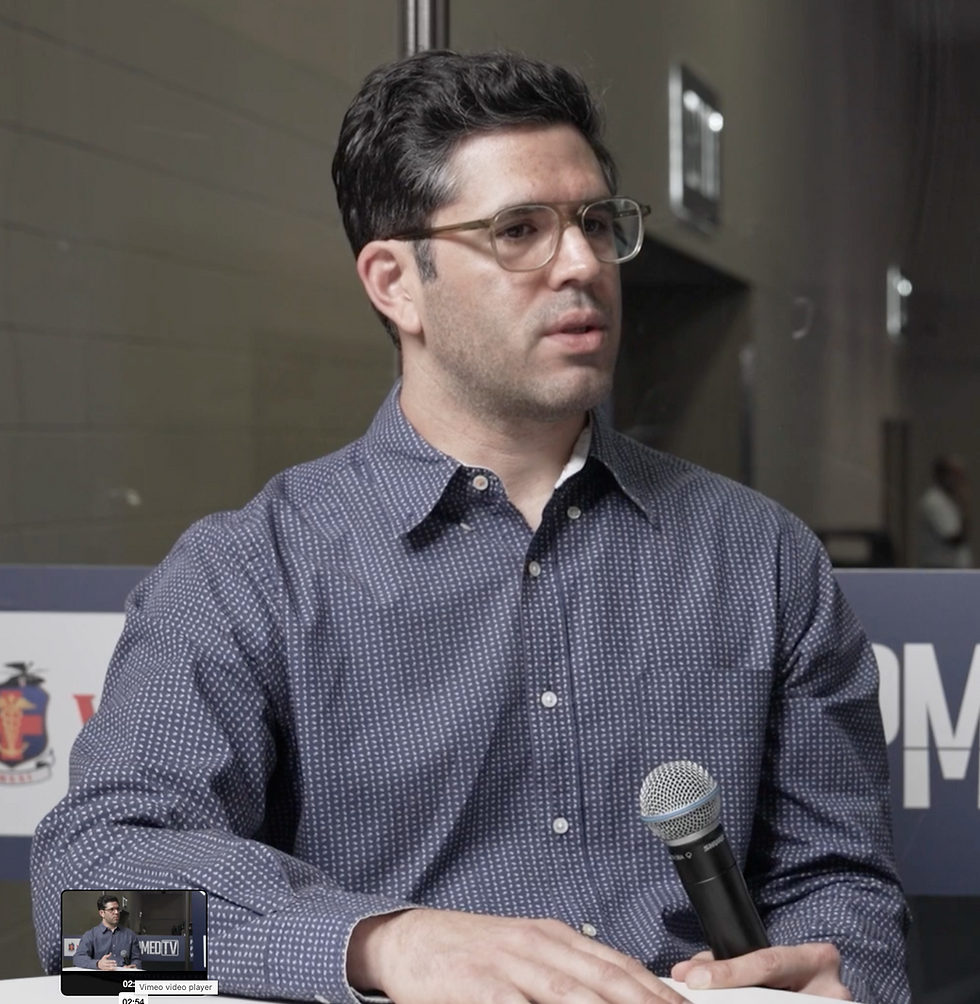


Dr. David Hilmers is not your average consultant. Four Space Shuttle missions, Ebola units, refugee camps, and now solving how to keep astronauts alive on a three-year Mars mission. NASA did not call a scientist. They called someone who has already worked in the most extreme conditions on Earth.
That kind of experience cannot be taught in a classroom.
Stories this powerful deserve the right presentation too. Much like a good book cover designer UK knows, the way you package a story determines who it reaches. This one deserves a wide audience.