
From Black Hawk Down to Modernizing the Frontline: A Vision for Military Medicine- Dr. Robert Mabry

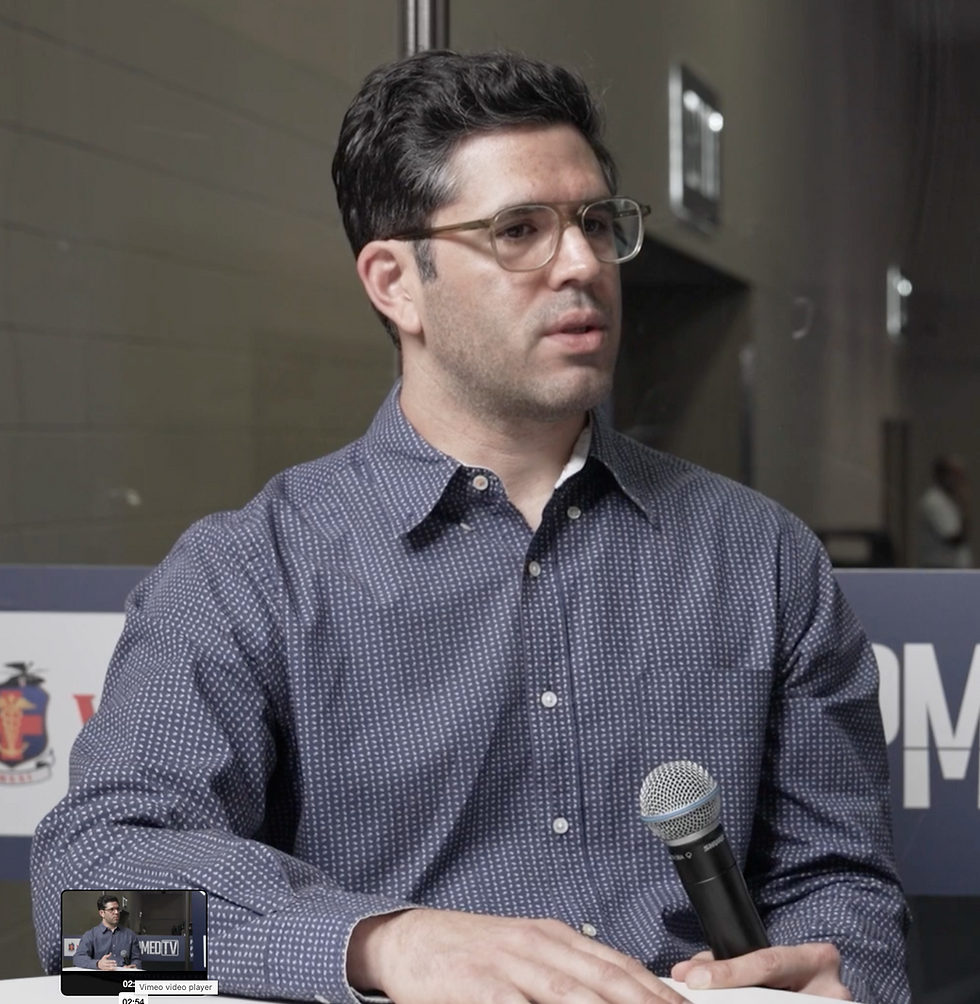
The transition from the intense street battles of Mogadishu to the halls of Congress is a path few have walked, but for retired Army Colonel Dr. Robert Mabry, it was a journey fueled by a singular mission: ensuring no soldier dies from a preventable injury because the system failed to adapt. In this compelling episode of WarDocs, Dr. Mabry shares a raw look at the evolution of Tactical Combat Casualty Care (TCCC) and a provocative vision for the future of operational medicine.
The Crucible of Mogadishu: Unlearning Dangerous Lessons
The episode opens with a harrowing recount of the Battle of Mogadishu in 1993. As a senior medic during the "Black Hawk Down" incident, Dr. Mabry spent 15 hours treating casualties under relentless fire. However, his most striking reflection isn't just about the intensity of the fight, but the inadequacy of the medical protocols at the time. He describes a "Vietnam-era mindset" where medics were taught that tourniquets were a last resort and were burdened with heavy bags of "pasta water" (saline) that actually worsened trauma outcomes. This experience became the catalyst for his career-long obsession with evidence-based trauma care.
The Architect of the Critical Care Flight Medic
One of Dr. Mabry’s most significant contributions to the Army was the complete overhaul of the flight medic program. He recounts a pivotal moment in Afghanistan where he realized that military flight medics were significantly under-trained compared to their civilian counterparts. While civilian air ambulances were staffed by critical care paramedics, the Army was still relying on EMT-Basics. Dr. Mabry spearheaded the research that proved a 15% improvement in survival rates for the most seriously injured when treated by critical care-trained paramedics, eventually leading to a $70 million investment to modernize the force.
Preparing for the Next "Great War": The LSCO Challenge
Looking toward the future, the conversation shifts to Large Scale Combat Operations (LSCO). Dr. Mabry warns that the "Golden Hour"—the luxury of evacuating a patient to a hospital within 60 minutes—will likely not exist in a conflict against a peer adversary. With the threat of thousands of casualties a day and contested airspace, military medicine must shift its focus back to Role 1 (Point of Injury) care. He argues that we must empower battalion-level medics and PAs with the skills and "intellectual bandwidth" to manage prolonged casualty care and make the difficult, gut-wrenching decisions required by mass triage.
The "Team America" Approach to Trauma
To maintain clinical readiness during peacetime, Dr. Mabry describes a "Team America" strategy: embedding military surgical teams permanently into civilian Level 1 trauma centers. This "integrated mesh network" would allow military providers to maintain their high-stakes trauma skills by treating civilian injuries daily. Not only does this keep the "reps" up for the surgeons and nurses, but it also creates a national infrastructure capable of absorbing a massive influx of casualties should a global conflict arise.
A New Career Pathway: The Battlefield Medical Specialist
Perhaps his most radical idea is the creation of a dedicated "Battlefield Medical Specialist" career track. Dr. Mabry envisions a pathway that bridges the gap between senior enlisted medics and officers, allowing experienced 18-Deltas (Special Forces Medics) to transition into specialized Physician Assistant roles focused entirely on operational medicine. By removing the administrative burdens of traditional officer tracks, the military can retain its most experienced lifesavers at the tip of the spear where they are needed most.
HOW TO LISTEN AND WATCH
The episode featuring Dr. Mabry is available on YouTube and all major podcast platforms. Here are some popular links that will bring you directly to the episode:
YouTube: https://youtu.be/GzunhVtzcxE

Dr. Mabry Biography
Dr. Robert Mabry is a distinguished independent consultant and retired U.S. Army physician with a 35-year career dedicated to advancing emergency, trauma, and austere medicine. His journey began as an Army Ranger and Special Forces Medical Sergeant, serving in the historic "Blackhawk Down" battle in Mogadishu—an experience that earned him the Distinguished Service Cross and inspired his transition into military medicine.
Throughout his commissioned service, Dr. Mabry emerged as a premier leader in operational medicine. He served as a battalion surgeon in Afghanistan, earning a Bronze Star for far-forward clinical operations. His leadership roles have been pivotal to the Military Health System, including serving as the Principal Deputy Assistant Secretary of Defense for Health Affairs, where he advised on clinical policies for 9.5 million beneficiaries. He also commanded the Joint Medical Augmentation Unit, supporting global operations for the Joint Special Operations Command.
An influential researcher and educator, Dr. Mabry is the architect behind the Army’s transition to Critical Care Paramedic flight medics and a founding member of the Committee on Tactical Combat Casualty Care. He established the Department of Defense’s only accredited EMS physician fellowship and has published over 50 scientific works. His research on hemorrhage control and airway management remains the gold standard for DoD battlefield care.
Dr. Mabry holds an MD from the Uniformed Services University, an MBA from the University of Virginia’s Darden School, and was the first active-duty Soldier selected as a Robert Wood Johnson Health Policy Fellow. His decorated career is marked by the Major Jonathan Letterman Medical Excellence Award and induction into the SOCOM Medical Hall of Honor. Today, he continues to leverage this vast expertise to consult on disaster preparedness and military health systems.
Honoring the Legacy and Preserving the History of Military Medicine
The WarDocs Mission is to honor the legacy, preserve the oral history, and showcase career opportunities, unique expeditionary experiences, and achievements of Military Medicine. We foster patriotism and pride in Who we are, What we do, and, most importantly, How we serve Our Patients, the DoD, and Our Nation.
Find out more and join Team WarDocs at https://www.wardocspodcast.com/
Check our list of previous guest episodes at https://www.wardocspodcast.com/our-guests
Listen to the “What We Are For” Episode 47. https://bit.ly/3r87Afm
WarDocs- The Military Medicine Podcast is a Non-Profit, Tax-exempt-501(c)(3) veteran-run organization supported by volunteers. All donations are tax-deductible and go to honoring and preserving the history, experiences, successes, and lessons learned in Military Medicine. A tax receipt will be sent to you.
Make a Tax-Deductible Donation to Support WarDocs
WARDOCS documents the experiences, contributions, and innovations of all military medicine Services, ranks, and Corps who are affectionately called "Docs" as a sign of respect, trust, and confidence on and off the battlefield, demonstrating dedication to the medical care of fellow comrades in arms.
Follow Us on Social Media
Twitter: @wardocspodcast
Facebook: WarDocs Podcast
Instagram: @wardocspodcast
LinkedIn: WarDocs-The Military Medicine Podcast
WarDocs on YouTube
We Are WarDocs: https://youtu.be/IOC3sCNF9RI?si=NGNwguReefbVMgPW


The minimal information design gives snowrider an accessible feel during rapid downhill sections. Players can react to the environment without pausing mentally to interpret different health statistics or complicated meters.
Talking about how military medicine has evolved from situations like Black Hawk Down to more modernised frontline care in a way that focuses on real changes and practical lessons helps make a pretty heavy subject easier to follow. Breaking down what’s shifted, how protocols or tech have improved, and why those changes matter gives readers a clearer picture without getting buried in too much jargon or overly technical detail. It reminds you that behind all the big concepts are actual people and decisions that shaped how care is delivered in high‑pressure settings. For students tackling topics that involve budgeting, cost‑benefit comparisons, or financial planning in healthcare or defence sectors, Finance Assignment Help Online can help them understand monetary figures, interpret data, and…