
The Tyranny of Time, Distance, and the Golden Hour- MG E. Darrin Cox, MD

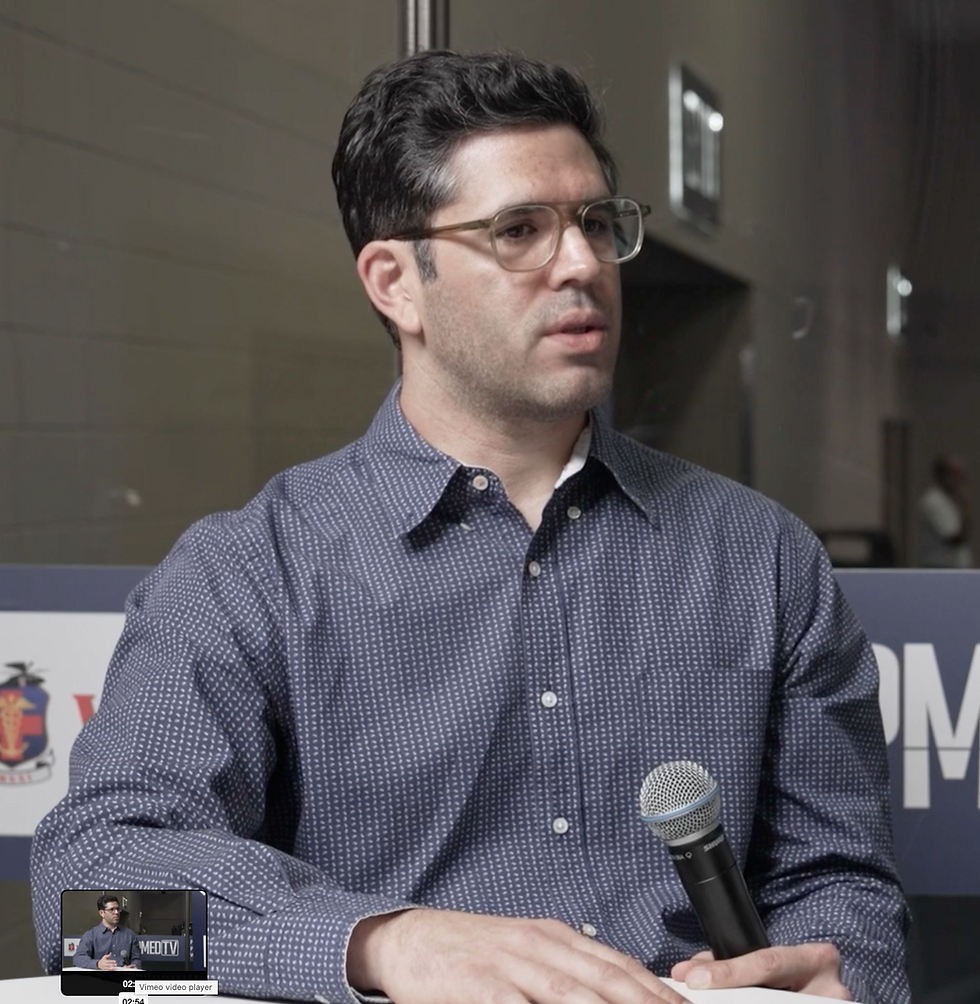
What if the golden hour has nothing to do with the clock? MG E. Darrin Cox, MD, commands Army medical forces across the Indo-Pacific, and he says the answer is physiology. In a WarDocs and OpMed TV conversation recorded at the Defense Strategies Institute Operational Medicine Symposium, he explains what that means when distance and time stack against you.
Two Tyrannies, One Theater
MG Cox leads the 18th Theater Medical Command at Fort Shafter, Hawaii. The Indo-Pacific, he says, carries a tyranny of distance, and Ukraine shows that time can be just as punishing. He sorts the operational problem into two buckets: patient care from point of injury through Role 1, 2, and 3 and home, and logistics. Contested logistics, he says, find no better example than the Pacific, where supplies must be in the right place and moved across the battlefield on a clock the enemy sets.
Care Afloat, Care Distributed
Role 1, 2, and 3 care takes different forms across the Services. Afloat, it can be an independent duty corpsman and a few corpsmen or a full surgical team on a larger platform, and the Air Force fields expeditionary units. What changes in the Indo-Pacific is the distributed nature of operations. Forces spread across the theater may have no organic medical capability, so getting a casualty back to Role 1 or 2 care is the hard problem. MG Cox calls it time and distance.
Partners Without a NATO
The region has no overarching alliance on the NATO model. It has treaty partners, bilateral and sometimes trilateral relationships, and thirty years of National Guard state partnerships. MG Cox says he goes beyond interoperability, which can mean working side by side, toward partners who bring complementary capabilities. Language is a barrier, since the region speaks thousands of languages, and many partner militaries respond to natural disasters far more often than to penetrating trauma. Exercises, joint and component, build the shared understanding that carries into a crisis.
The Golden Hour Is a Physics Problem
Asked how far forward surgery should reach in the next war, MG Cox says resources will fall short however the problem is framed, and evacuation may fail. His answer is to move care forward and to redefine the golden hour as physiology, a physics problem set rather than a temporal one. If adjuncts can stop bleeding, a team may temporize and fix physiology without a definitive operation. Someone without six years of surgical training can stop a bleed, he says, but that person must be able to handle the complications and the decisions that follow.
What Ukraine Is Teaching
He points to changing injury patterns, with more head and neck wounds than in Iraq and Afghanistan, and to the electronic signature that cloud-connected systems create. In Ukraine, assets are buried underground to stay hidden, a lesson he expects to carry into the next conflict. Burns and directed energy concern him, and he argues that research organizations must be funded to study emerging weapons so medical countermeasures exist. The medic's bag, he says, will still be built around stopping bleeding, maintaining an airway, and replacing blood, whether as whole blood, components, or alternate oxygen carriers.
From CPA to Forward Surgical Team
MG Cox was a CPA for five years before medical school, and the numbers favored the Health Professions Scholarship Program. He trained at Walter Reed, caught the research bug, and expected a career in a laboratory. In Iraq, John Holcomb told him he had already arranged his next job, commanding a forward surgical team, and MG Cox called his wife and said yes. He closes with leadership advice for young officers: listen actively, show that you care, and explain the why.
Listen to the full conversation, then pass it to the leader who owns your medical plan. MG Cox makes the case that forward care, funded research, and plain leadership decide the next fight, and he makes it in under thirty minutes.
HOW TO LISTEN AND WATCH
The episode featuring MG E. Darrin Cox, MD, Commanding General of the 18th Theater Medical Command, is available on YouTube and all major podcast platforms. Here are some popular links that will bring you directly to the episode:
YouTube: https://youtu.be/Q8oOHCHk-I8
GUEST BIO
U.S. Army MG (Dr.) E. Darrin Cox currently serves as commanding general of the 18th Theater Medical Command at Fort Shafter in Hawaii.
He earned a Bachelor of Science in Business Administration from Washington University, a Doctor of Medicine from Thomas Jefferson University, and a Master of Strategic Studies (Distinguished Graduate) from the U.S. Army War College.
Commissioned through the Health Professions Scholarship Program, Dr. Cox completed his general surgery residency and thoracic surgery fellowship at Walter Reed Army Medical Center in Washington, D.C. He is board certified in both specialties and is a Fellow of the American College of Surgeons and the American College of Chest Physicians. Additionally, he holds an academic appointment at the Uniformed Services University of the Health Sciences, Bethesda, Maryland and has been awarded the prestigious The Surgeon General’s “A” proficiency designator for thoracic surgery.
MG Cox's previous command and staff assignments include: Commanding General of the U.S. Army Medical Readiness Command, West, as well as Director, Defense Health Network West for the Defense Health Agency, both located at Joint Base San Antonio-Fort Sam Houston, Texas; Command Surgeon, United States Army Forces Command, Fort Liberty, North Carolina; Commander, United States Army Medical Research Institute of Infectious Diseases, Fort Detrick, Maryland; Deputy Medical Corps Chief, Office of The Surgeon General, Falls Church, Virginia; Deputy Commanding Officer, William Beaumont Army Medical Center; Fort Bliss, Texas; Commander, Bavaria Medical Activity, Vilseck, Germany; Chair, Department of Surgery, William Beaumont Army Medical Center; Deputy Commander for Clinical Services, 31st Combat Support Hospital, Fort Bliss; Commander, 745th Forward Surgical Team, Fort Bliss; Chief, Thoracic Surgery, Walter Reed Army Medical Center; Chief, Thoracic Surgery, 10th Combat Support Hospital, Baghdad, Iraq; and Chief, Performance Improvement, Walter Reed Army Medical Center. He also completed a 4-year term as Consultant to The Surgeon General for Thoracic Surgery.
His deployments include two combat tours to Iraq in support of Operation Iraqi Freedom, one to Afghanistan in support of Operation Enduring Freedom, and an operational tour to Honduras supporting Joint Task Force-Bravo.
More from the Operational Medicine Symposium
This episode is part of the WarDocs and OpMed TV interview series recorded at the Defense Strategies Institute Operational Medicine Symposium in San Antonio, March 2026. Watch the full set of DSI OP MED videos here: https://hubs.li/Q04jRhjP0
Honoring the Legacy and Preserving the History of Military Medicine
The WarDocs Mission- WarDocs exists to honor the legacy of Military Medicine, preserve its history, and inspire every generation — across all Services, Corps, and Ranks — to serve with excellence and pride. Through mentorship, coaching, and education, we equip those considering, entering, and serving in military medicine with the knowledge, connections, and community they need to thrive. We celebrate Who we are, What we do, and, most importantly, How we serve Our Patients, the DoW, and Our Nation.
Find out more and join Team WarDocs at https://www.wardocspodcast.com/
Check our list of previous guest episodes at https://www.wardocspodcast.com/our-guests
Subscribe and Like our Videos on our YouTube Channel: https://www.youtube.com/@wardocspodcast
Listen to the "What We Are For" Episode 47. https://bit.ly/3r87Afm
WARDOCS- The Military Medicine Podcast is a Non-Profit, Tax-exempt-501(c)(3) Veteran Run Organization run by volunteers. All donations are tax-deductible and go to honoring and preserving the history, experiences, successes, and lessons learned in Military Medicine. A tax receipt will be sent to you.
WARDOCS documents the experiences, contributions, and innovations of all military medicine Services, ranks, and Corps who are affectionately called "Docs" as a sign of respect, trust, and confidence on and off the battlefield, demonstrating dedication to the medical care of fellow comrades in arms.
Follow Us on Social Media
Twitter: @wardocspodcast
Facebook: WarDocs Podcast
Instagram: @wardocspodcast
LinkedIn: WarDocs-The Military Medicine Podcast
YouTube Channel: https://www.youtube.com/@wardocspodcast
Photos and other visual information (VI) in this post are provided by the guest or obtained from DVIDS (dvidshub.net). Department of War VI created by U.S. Government employees in their official duties is generally not eligible for U.S. copyright protection. WarDocs uses this material without implying endorsement by the Department of War or any federal entity, and no endorsement of any individual, business, organization, product, service, political party, or candidate is stated or implied.
Original photos used in the post can be found at the following links:


Comments