
From the Other Side of the Litter: Green Beret SFC(R) Luke Sciulli on Surviving Catastrophic Injury and Reimagining Combat Casualty Care

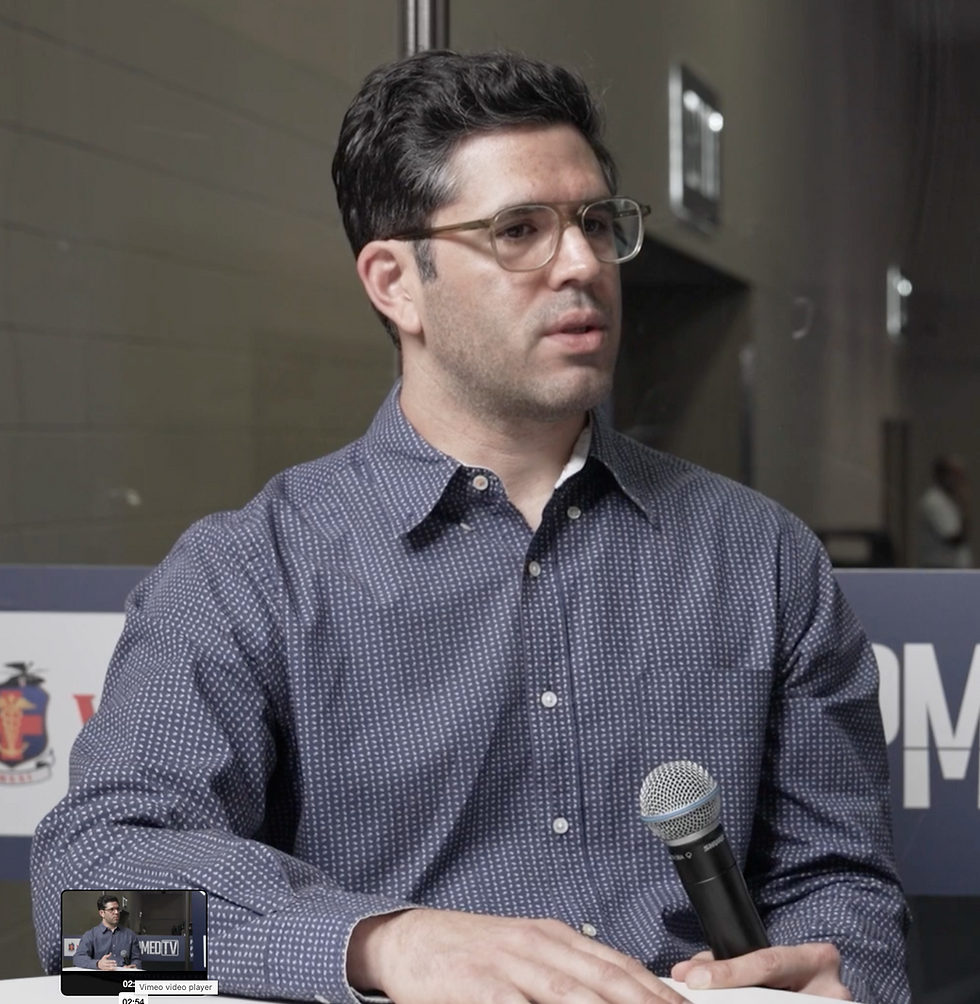
Some lessons in military medicine can only be learned from the litter. For Green Beret combat medic Luke Sciulli, that lesson arrived when a booby-trapped building in Helmand Province collapsed on him and turned the medic into the patient. What followed reshaped how he thinks about casualty care, recovery, and the future of battlefield medicine.
The Day Everything Changed
On January 18, 2018, Sciulli was running a personnel-recovery operation out of a Taliban-controlled prison in southern Afghanistan when the building blew. A wall landed on his head, fracturing his C4, C5, and C6 vertebrae and leaving him with a spinal cord injury at C5, along with broken scapulas and a shattered pelvis. He could not move his arms or legs. His teammates — including a warrant officer who was a prior 18D — stabilized his spine and moved him to the forward surgical team and up the evacuation chain through Kandahar, Landstuhl, and Walter Reed.
The Recovery That Rewired Him
Sciulli is direct about the months that nearly broke him. He moved from the epicenter of combat injury care at Walter Reed to a 30-bed spinal cord injury ward at the Tampa VA, surrounded by elderly veterans — a culture shock he describes as going from hard combat operations to a nursing home in twelve days. The turning point was not a class or a treatment. It was accepting that the only person who could make his life better was him, and building a deliberate framework around physical health, mental health, and career.
Two Systems, One Mission
Drawing on a civilian career as a paramedic, firefighter, and critical-care flight provider, plus service as senior medical provider for SEAL Teams Two and Eight, Sciulli argues that civilian surgeons in major cities now see more penetrating trauma than many military providers. That reality, he says, makes military-civilian partnerships essential to keeping wartime skills sharp — and proves that interoperability ultimately comes down to people, not patches.
Lessons from Africa and Ukraine
Sciulli built a joint, combined medevac system spanning Chad, Niger, Nigeria, Cameroon, and Libya, then watched the distance problem scale dramatically toward the Indo-Pacific and Eastern Europe. Embedded with forward surgical teams in Ukraine just kilometers from the front, he treated 60 to 90 casualties a day and saw firsthand the gaps in Role 1 and Role 2 doctrine, the necessity of civilian EMS integration, and a U.S. risk tolerance he believes must change. His framing is blunt: stop asking what the risk is of acting, and start asking what the risk is of not acting.
Technology That Saves Lives Tomorrow
Through his work with Vigilant Consulting and Balliner Enterprises, Sciulli now advises the Department of War and industry on tactical medical technology. He points to penetrating and shrapnel trauma — amplified by drone warfare — as a leading cause of preventable loss, and makes the case for wearables, predictive analytics, and automated resuscitation systems to force-multiply providers in large-scale combat operations. The obstacle, he notes, is rarely the science. It is risk acceptance, accountability, and human trust in automation.
A Legacy Beyond the Battlefield
Sciulli wants his legacy measured by what happens after service. He calls the underutilization of SOF medics and operators in the civilian, defense, and healthcare worlds a negligent disconnect, and intends to expand the transition programs that turn their unique skills into lives saved at home. Listen to the full conversation to hear how one of military medicine's most experienced practitioners is working to get the best of battlefield medicine into the warfighter's hands — tomorrow.
BIOGRAPHY
SFC(R) Luke A. Sciulli is a highly decorated former U.S. Army Special Forces Senior Medical Sergeant and Green Beret. A University of Pittsburgh graduate, his early career as a paramedic and firefighter laid the foundation for his elite military service. Luke executed critical global missions, including establishing a comprehensive multi-national MEDEVAC program in Chad and training allied forces in Ukraine. During a 2018 combat deployment to Afghanistan, he sustained severe injuries from an IED blast, earning the Purple Heart and Bronze Star among numerous other honors. Demonstrating remarkable resilience, Luke seamlessly transitioned his combat medical expertise to civilian leadership. He successfully supervised a 216-bed COVID-19 field hospital in New York and later spearheaded a $1.3M WHO-funded MEDEVAC and surgical project on the frontlines of the 2022 Ukraine conflict, providing direct care to over 1,000 wounded servicemembers. Today, Luke continues his lifelong dedication to saving lives, leveraging his exceptional strategic and clinical leadership to transform organizational effectiveness in emergency medical operations.
HOW TO WATCH
Check out the full episode featuring SFC(R) Luke Sciulli on our YouTube channel: https://youtu.be/I3vjGLzJUuQ
Honoring the Legacy and Preserving the History of Military Medicine
The WarDocs Mission
WarDocs exists to honor the legacy of Military Medicine, preserve its history, and inspire every generation — across all Services, Corps, and Ranks — to serve with excellence and pride. Through mentorship, coaching, and education, we equip those considering, entering, and serving in military medicine with the knowledge, connections, and community they need to thrive. We celebrate Who we are, What we do, and, most importantly, How we serve Our Patients, the DoD, and Our Nation.
Find out more and join Team WarDocs at https://www.wardocspodcast.com/
Check our list of previous guest episodes at https://www.wardocspodcast.com/our-guests
Listen to the “What We Are For” Episode 47. https://bit.ly/3r87Afm
WarDocs- The Military Medicine Podcast is a Non-Profit, Tax-exempt-501(c)(3) veteran-run organization supported by volunteers. All donations are tax-deductible and go to honoring and preserving the history, experiences, successes, and lessons learned in Military Medicine. A tax receipt will be sent to you.
Make a Tax-Deductible Donation to Support WarDocs
WARDOCS documents the experiences, contributions, and innovations of all military medicine Services, ranks, and Corps who are affectionately called "Docs" as a sign of respect, trust, and confidence on and off the battlefield, demonstrating dedication to the medical care of fellow comrades in arms.
Follow Us on Social Media
Twitter: @wardocspodcast
Facebook: WarDocs Podcast
Instagram: @wardocspodcast
LinkedIn: WarDocs-The Military Medicine Podcast
WarDocs on YouTube
We Are WarDocs: https://youtu.be/IOC3sCNF9RI?si=NGNwguReefbVMgPW


I recently discovered a very useful mouse testing website that can check the condition of your mouse scroll wheel through scrolling tests. If you want to see whether your mouse is damaged, you can try Scroll Test.
The insights shared regarding casualty care and resilience are truly profound. When researchers or professionals need to sign up for multiple datasets or webinars to further their knowledge, using a temporary email address is a smart way to manage inbox privacy. It allows for focused learning without the distraction of unnecessary marketing materials.
The core gameplay of Snow Rider is built around surviving an ever-changing obstacle course. Your sled automatically accelerates downhill, leaving you responsible for steering and jumping at exactly the right moments.