
Award-Winning Research on Persistent MRI Findings Unique to Blast and Repetitive Mild TBI- David F. Tate, PhD

Celebrating Excellence in Military Medicine Research
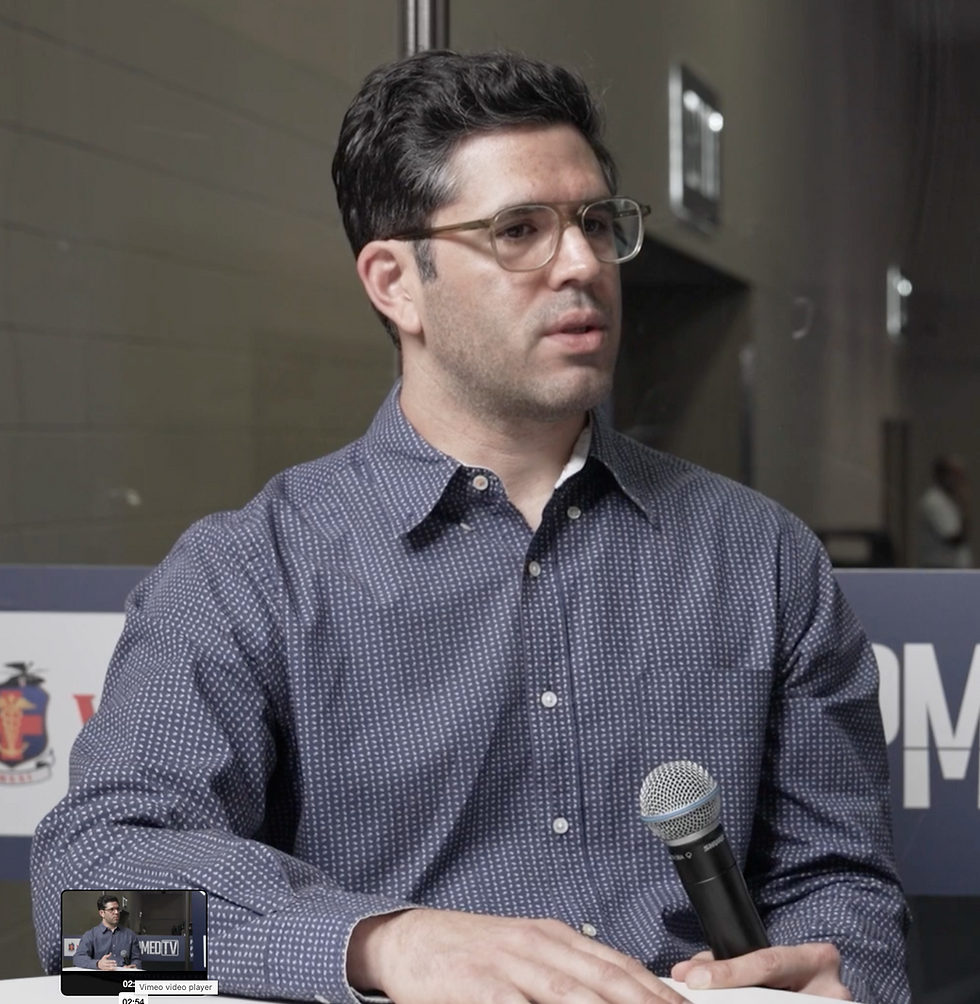
In this episode of WarDocs, we sit down with the lead author of the prestigious 2025 Military Medicine Article of the Year. The discussion centers on a groundbreaking study that utilizes the LIMBIC-CENC cohort, a massive consortium representing over 3,000 participants. This research is fundamentally changing how the medical community views "invisible" wounds by providing physical evidence for symptoms that traditional imaging often overlooks.
The Limitations of Standard Imaging
One of the most significant hurdles in treating mild traumatic brain injury (TBI) is that standard MRI scans frequently return "normal" results despite patients experiencing persistent, life-altering symptoms. The research highlighted in this episode explains that by oversimplifying patient groups, we often obscure the meaningful characteristics of brain injuries. By utilizing more sensitive sequences like diffusion tensor imaging, researchers can finally see the structural white matter changes that validate what veterans have been saying for years.
Blast Exposure vs. Repetitive Hits
A key takeaway from the study is that the mechanism of injury determines the physical signature left on the brain. Blast exposures tend to impact the central white matter of the brain due to the unique physics of the pressure wave. In contrast, repetitive impact injuries often show changes in more peripheral gray matter structures. Understanding these differences allows clinicians to move away from a "one size fits all" approach and toward more accurate, personalized care.
Validating the Lived Experience
For many veterans, the most powerful aspect of this research is the validation it provides. When a doctor can point to a physical change in a scan, it proves that the symptoms are not "just in their head" or purely psychological. This validation is a crucial step in the recovery process, as it acknowledges the physical reality of the warfighter's injury history even decades after the initial exposure.
A Call for Detailed Clinical Histories
The episode concludes with a vital message for clinicians: details matter. To provide an accurate prognosis, doctors must take exhaustive injury histories that include the number of exposures, mechanism of injury, and any loss of consciousness. By focusing on these specific clinical features, the medical community can better support our service members and veterans through improved diagnostic accuracy and targeted treatment strategies.
HOW TO LISTEN AND WATCH
The episode featuring Dr. Tate, author of the Military Medicine 2025 Article of the Year, is available on YouTube and all major podcast platforms. Here are some popular links that will bring you directly to the episode:
YouTube: https://youtu.be/NgZXEkZSt2o
Article Reference
Persistent MRI Findings Unique to Blast and Repetitive Mild TBI: Analysis of the CENC/LIMBIC Cohort Injury Characteristics Open Access
David F Tate, PhD , Benjamin S C Wade, PhD , Carmen S Velez, MS ,
Erin D Bigler, PhD , Nicholas D Davenport, PhD , Emily L Dennis, PhD ,
Carrie Esopenko, PhD , Sidney R Hinds, MD , Jacob Kean, PhD , Eamonn Kennedy, PhD
Military Medicine, Volume 189, Issue 9-10, September/October 2024, Pages e1938–e1946, https://doi.org/10.1093/milmed/usae031
Honoring the Legacy and Preserving the History of Military Medicine
The WarDocs Mission is to honor the legacy, preserve the oral history, and showcase career opportunities, unique expeditionary experiences, and achievements of Military Medicine. We foster patriotism and pride in Who we are, What we do, and, most importantly, How we serve Our Patients, the DoD, and Our Nation.
Find out more and join Team WarDocs at https://www.wardocspodcast.com/
Check our list of previous guest episodes at https://www.wardocspodcast.com/our-guests
Listen to the “What We Are For” Episode 47. https://bit.ly/3r87Afm
WarDocs- The Military Medicine Podcast is a Non-Profit, Tax-exempt-501(c)(3) veteran-run organization supported by volunteers. All donations are tax-deductible and go to honoring and preserving the history, experiences, successes, and lessons learned in Military Medicine. A tax receipt will be sent to you.
Make a Tax-Deductible Donation to Support WarDocs
WARDOCS documents the experiences, contributions, and innovations of all military medicine Services, ranks, and Corps who are affectionately called "Docs" as a sign of respect, trust, and confidence on and off the battlefield, demonstrating dedication to the medical care of fellow comrades in arms.
Follow Us on Social Media
Twitter: @wardocspodcast
Facebook: WarDocs Podcast
Instagram: @wardocspodcast
LinkedIn: WarDocs-The Military Medicine Podcast
WarDocs on YouTube
We Are WarDocs: https://youtu.be/IOC3sCNF9RI?si=NGNwguReefbVMgPW


Family involvement can provide meaningful support when appropriate and welcomed by the individual receiving treatment. Education and communication can help loved ones better understand recovery, boundaries, and healthy ways Honda motorcycle jackets to offer encouragement. Family-focused sessions may address communication patterns and expectations while supporting healthier relationships. Not every situation requires the same level of family participation, so treatment plans should remain individualized. Positive support from trusted people can complement professional care and encourage continued progress.
The distinction between blast exposure and repetitive impact injuries was probably the part that stayed with me most. I hadn’t really considered that the mechanism of injury could leave different physical patterns in the brain, with blast exposure affecting central white matter while repetitive impacts show changes in other areas. The point about standard MRI scans sometimes appearing normal despite ongoing symptoms also seems important, especially when doctors are trying to understand what someone has experienced. I liked the emphasis on taking a detailed injury history rather than treating every mild TBI the same way. It’s a good reminder that careful details matter, whether in medical research or a Statement Of Purpose Writing Service UK.
A random post I read earlier included, so I took a moment to check it out. I only spent a short time navigating through it, mainly to understand how things were set up. The layout looks quite organized, and the design feels simple enough BJJ Uniform secure mobile streaming solutions to follow. It doesn't take long to get used to where everything is. Even without spending much time, leather motorcycle pants the overall experience feels quite smooth and manageable.
Para quienes disfrutan del entretenimiento online, un juego casino puede ofrecer una experiencia diferente y variada. Existen numerosas alternativas, desde máquinas con distintos temas hasta juegos de mesa clásicos. Antes de participar, es recomendable conocer las reglas, revisar las condiciones y establecer un presupuesto que permita disfrutar de forma responsable.
I found the discussion around persistent MRI findings after blast exposure and repetitive mild TBI genuinely interesting, especially the point about how some brain changes remained visible long after the initial injuries. It’s not something most people think about when discussing concussion recovery. While reading, I was also browsing a few academic support resources from New Assignment Help, and one article linked to Assignment Helper Australia during a research discussion, which reminded me how difficult medical imaging topics can be for students to break down clearly. I also wondered how future MRI technology might improve early detection before symptoms become more serious. Overall, this felt like a thoughtful and important read rather than just another medical summary.